

Dubai workers’ housing: New 3.7 sqm space rule and what residents need to know
More than 1,400 buildings have been assessed under a smart classification system
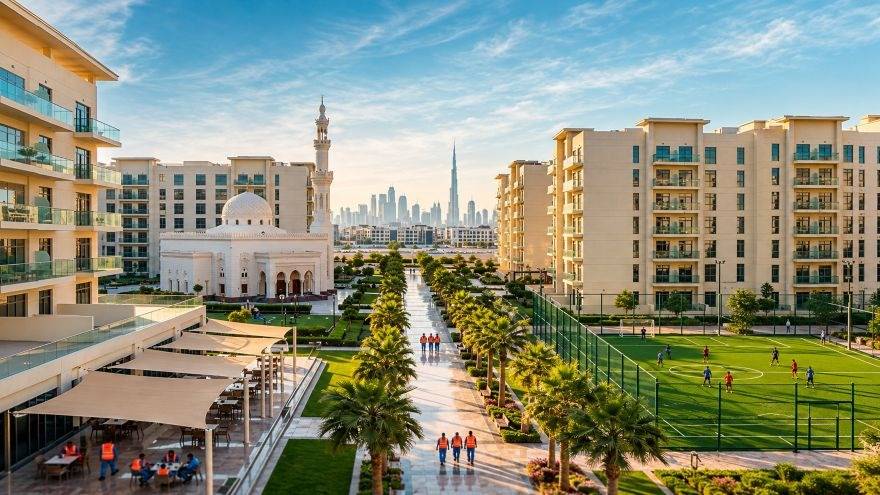
DUBAI – The Dubai Municipality has announced new planning and design standards for workers’ accommodation as part of a wider programme to improve living conditions across the emirate.
For workers living in shared accommodation, the updated requirements cover the amount of sleeping space, supporting services, recreational facilities and outdoor areas that should be provided. The programme also includes inspections, building upgrades and improvements to infrastructure and community facilities.
The measures are being implemented under Dubai’s Workers’ Accommodation Policy in coordination with government sector partners. Here is what workers need to know about the updated standards and the improvements being introduced across workers’ areas.

Sleeping space
One of the key requirements concerns the amount of space allocated for sleeping. Under the updated planning and design standards, workers’ accommodation must provide a minimum sleeping area of 3.7 square metres per person.
This requirement sets a specific minimum for the sleeping area allocated to each resident and forms part of the municipality’s wider approach to improving accommodation standards.
The rules also provide requirements for the wider space needed to support workers living in these communities. Between 8.9 and 10.3 square metres of gross floor area per person is to be allocated for supporting services within workers’ areas.
Recreational facilities and outdoor spaces must also be provided at a rate of 0.75 to 1.5 square metres per person, creating designated areas for leisure and outdoor activities.
Buildings assessed
Dubai Municipality has surveyed 1,417 workers’ accommodation buildings through a unified smart classification system.
The assessment looks at the structural condition of buildings as well as their compliance with public health and safety standards. The system is intended to give authorities a clearer picture of accommodation conditions and help identify where improvements are required.
Workers may also see differences between accommodation facilities based on their classification under the municipality’s Model Workers’ Accommodation initiative.
A total of 19 facilities have been recognised as model accommodation. Three received Platinum, nine received Gold and seven received Silver classifications.
A shared government database has also been created, bringing together statistics and performance indicators from workers’ communities. The information will help authorities identify areas requiring improvements and plan future projects.
Facilities and access
The programme is not limited to accommodation buildings. Field surveys have examined infrastructure across workers’ areas, including pedestrian pathways, bridges, pavements and other facilities.
Dubai Municipality is addressing identified requirements according to priority and is also developing parking solutions for workers’ areas.
The wider programme includes retail outlets, community facilities and sports amenities, giving workers access to shopping, recreation and opportunities for physical activity closer to their residential communities.
The municipality is also working on essential service projects based on the specific needs of individual workers’ areas. The programme seeks to improve coordination between different service sectors while expanding facilities available within these communities.
Safety and standards
The updated accommodation requirements are part of a broader review of Dubai’s regulatory framework for workers’ areas. Relevant laws and regulations are being reviewed to align them with best practices, improve compliance and support the development of infrastructure and accommodation projects.
The municipality’s programme includes upgrading buildings and public facilities according to engineering, technical, health and safety requirements.
The projects are being implemented as part of Dubai’s broader urban development plans, including the Dubai 2040 Urban Master Plan and the Dubai Quality of Life Strategy 2033.